
Stripe Sync Subscriptions: subscriptions and documents
Reuse Stripe gateway credentials and webhook, synchronize subscriptions, link customers, and optionally create documents.
Last updated: 2026-08-19
Stripe gateway dependency
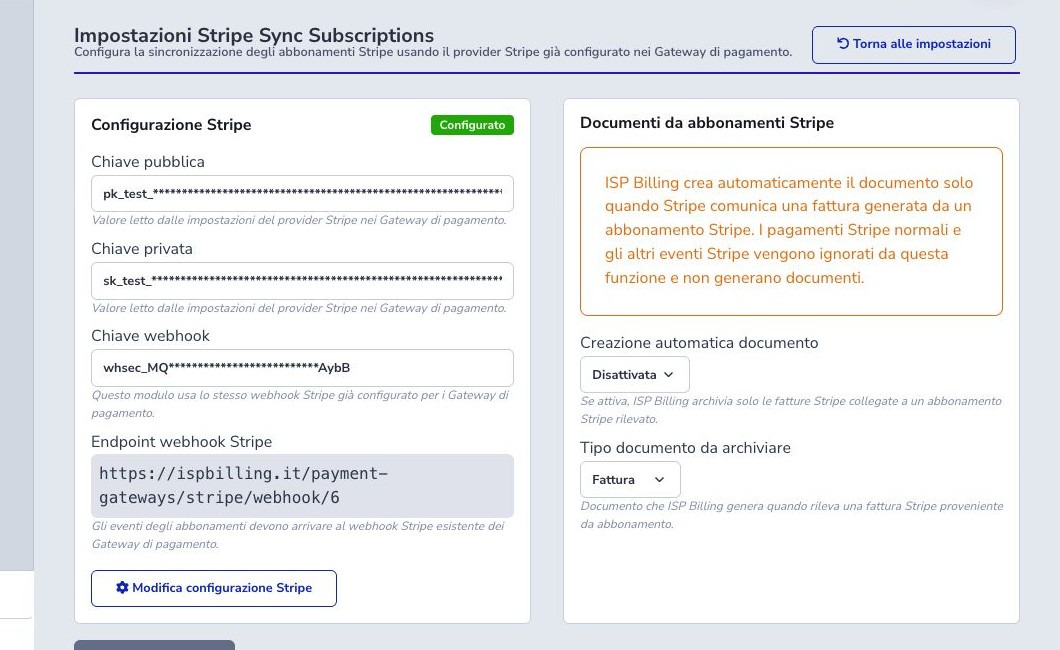
The module reuses the public key, secret key, and signing secret configured in the Stripe payment gateway. Settings display masked values and the shared webhook endpoint; complete gateway configuration first if any required value is missing.
Never mix test and live credentials. Confirm key prefixes, Stripe account, currency, and endpoint environment before synchronization.
Webhook and events
Subscription events arrive through the Stripe webhook already registered for the payment gateway. The signing secret validates the event; a wrong secret, disabled endpoint, rejected response, or missing event type prevents processing.
Inspect Stripe delivery attempts, event name, destination, HTTP response, and signature environment. Do not create compensating documents manually until duplicate risk is understood.
Automatic document creation
The option can create an invoice, receipt, or proforma only when Stripe reports an invoice generated by a synchronized subscription. Ordinary Stripe payments and unrelated events do not create documents through this module.
Before enabling it, configure numbering, VAT, customer fiscal data, currency, descriptions, and duplicate prevention. Review the first generated document line by line before relying on automation.
Manual synchronization
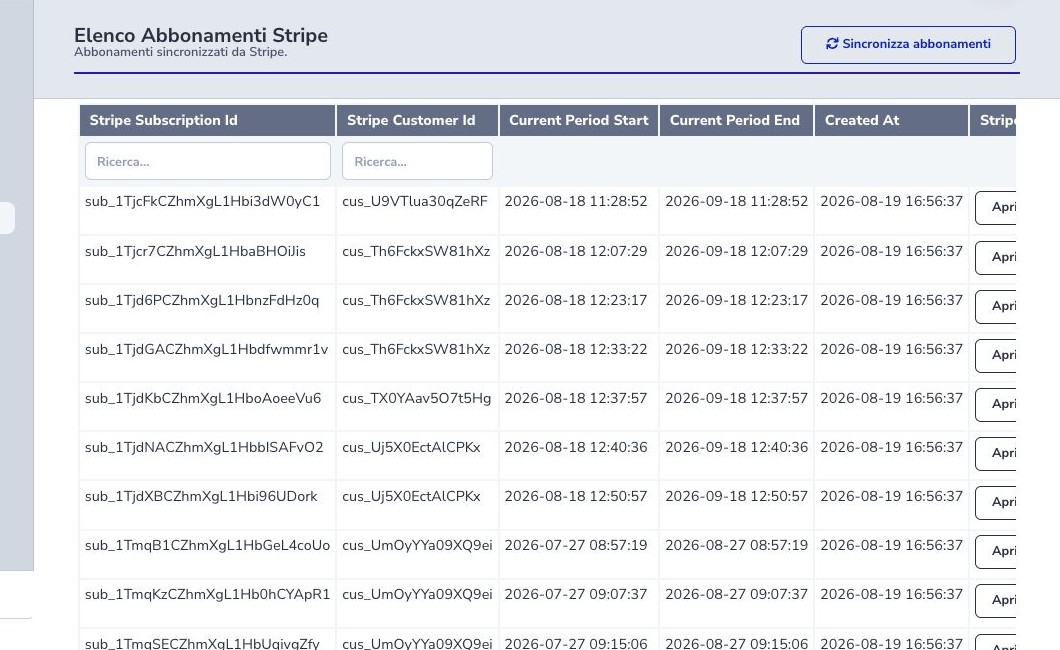
Synchronize subscriptions follows every Stripe result page and creates missing records or updates existing ones by Subscription ID. The log reports processed, created, updated, and failed counts.
The action queries Stripe immediately. Run it against the intended account, wait for completion, and do not start a second job after a timeout until the list and logs have been reconciled.
Customer association and creation
Stripe Customer ID and email are used to resolve the CRM customer. When supported, synchronization can create a customer record from Stripe data while retaining the remote identifier.
Deduplicate by identity and email before bulk use. A customer created from payment data may still require legal name, tax identifiers, invoice address, and electronic-delivery fields before valid billing.
List and states
The list correlates Subscription ID, Stripe customer, CRM customer, product or description, amount, currency, status, and current period. Use remote identifiers to diagnose mismatches with the configured Stripe account.
Stripe states such as active, canceled, past_due, incomplete, or trialing describe the remote subscription and do not automatically equal the lifecycle of an ISP Billing service. Define how cancellation, collection failure, suspension, and termination are reconciled.
Checklist
- Configure the Stripe gateway first
- Keep test and live environments separate
- Verify webhook event delivery and signatures
- Choose the document type deliberately
- Validate numbering, tax, and currency
- Deduplicate Stripe and CRM customers
- Run one synchronization at a time
- Review processed and failed counts
- Reconcile remote and service lifecycle states
- Inspect the first automatic document
- Avoid manual duplicates during delayed events